

Updated August 2026 • Software Review
Best Compensation Management Software in 2026: 10 Platforms Reviewed
I went hands-on with FocalReview, SimplyMerit, Salary.com, CompXL, and seven more platforms to find out which ones actually reduce comp-cycle chaos — and which ones just move your spreadsheets to the cloud.
By Oyekale Olawale • Websites2Know
⚡ Quick Answer
SimplyMerit is the best pick for most mid-size teams — it goes live in five days, starts at $6,500/year, and handles merit, bonus, and equity cycles without a lengthy implementation. For global enterprise needs, FocalReview (SpiraLinks) and COMPview (HRsoft) offer the deepest configurability. For market data baked directly into the platform, Salary.com stands alone.
I test a lot of software. It’s what I do here at Websites2Know. But compensation management platforms are a different breed — you’re not just reviewing features, you’re evaluating something that directly affects how people feel about their jobs and whether they stay.
After evaluating ten platforms in this space — reviewing demos, digging through documentation, combing through verified user reviews on Gartner Peer Insights, G2, Capterra, and GetApp — I have a clearer picture of what separates great comp software from the ones that just dress up your spreadsheets with a nicer interface.
Here’s my honest take on all ten.
🔍 How I Evaluate These Platforms
I evaluate compensation software across five criteria: implementation speed (how quickly a real team could go live), workflow clarity (do managers actually understand what to do without training?), integration depth (HRIS and payroll connectivity), compensation intelligence (market data, modeling, equity auditing), and mobile/UI quality. I cross-reference vendor documentation with independent user reviews to avoid marketing spin. Where pricing is publicly listed, I verify it directly — where it’s not, I note that clearly.
Why the Compensation Software Market Is Exploding Right Now
Three forces are colliding in 2026 that make this market hard to ignore.
Pay transparency laws are spreading fast. Massachusetts, New Jersey, Vermont, Illinois, and Minnesota have all enacted pay transparency legislation, and the EU Pay Transparency Directive is pushing European organizations to document every compensation decision. You can’t do that with a spreadsheet in someone’s Downloads folder.
The cost of underpaying — or being perceived as underpaying — has never been higher. SHRM data shows that better compensation is behind 53% of new job searches in the U.S. Employees are comparing their pay on LinkedIn, Glassdoor, and Levels.fyi. If your internal numbers don’t hold up, you’ll find out when someone resigns.
The ROI is real. A Forrester study commissioned by Xactly found that organizations investing in proper compensation management saw a 328% ROI over three years. That number includes time recovered from spreadsheet chaos, but also the more meaningful returns from manager efficiency and employee trust.
Market Snapshot
Compensation Software Market Growth (2025–2035)
Source: Research Nester (2025). CAGR: 11.4% (2026–2035). Cloud deployments expected to command ~60% of market share by 2035.
All 10 Platforms at a Glance
Before the deep dives, here’s the full feature matrix. I built this so you can cross off platforms that don’t fit your core requirements before reading 3,000 words.
| Platform | Best For | Multi-Currency | Market Data | Fast Setup | Starting Price |
|---|---|---|---|---|---|
| FocalReview | Enterprise / Global | ✓ | — | — | Custom quote |
| COMPview | Complex cycles | ✓ | — | — | Custom quote |
| Salary.com | Market data + planning | ✓ | ✓✓ | — | Custom quote |
| CompXL | Spreadsheet migration | ✓ | — | — | Custom quote |
| Harvest HCM | Automation-first | ✓ | — | — | Custom quote |
| CompAccelerator | Compliance-heavy orgs | ✓ | — | — | Custom quote |
| CompTrak | Total rewards visibility | ✓ | — | — | Custom quote |
| PayScale Insight Lab | Survey management | ✓ | ✓✓ | — | Custom quote |
| CURO Compensation | End-to-end coverage | ✓ | — | — | Custom quote |
| SimplyMerit ⭐ | Mid-size / speed | ✓ | — | ✓ (5 days) | $6,500/year |
1. FocalReview — SpiraLinks Corporation
Best For: Enterprise organizations needing performance-linked compensation across multiple regions
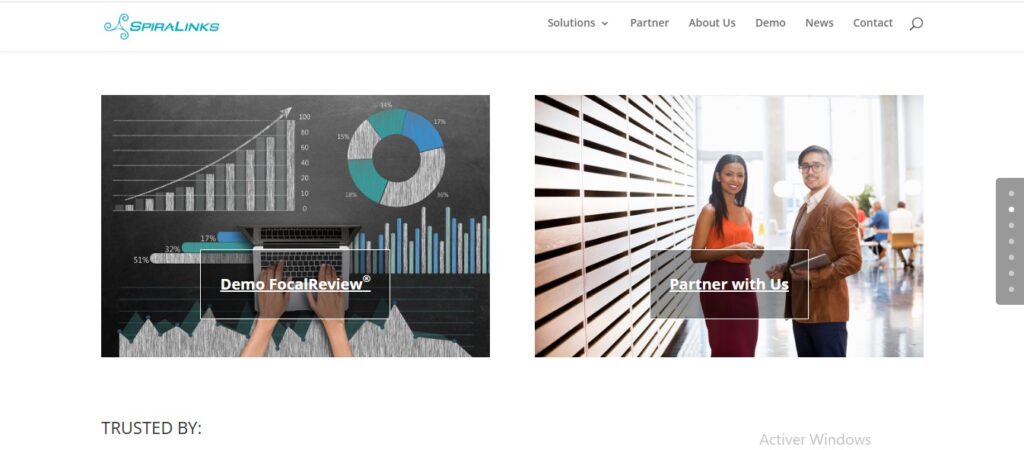
FocalReview is SpiraLinks’ flagship product, and they’ve been building it for over 30 years — which shows. This isn’t a startup that bolted a comp module onto an HRIS. It’s a purpose-built compensation and performance management suite used by Fortune 500-level organizations.
What sets FocalReview apart is its role-based, multi-layered architecture. You can run salary, bonus, and stock plan cycles on completely different timetables for different employee populations — in multiple currencies and languages simultaneously. For a global company managing engineers in Germany, sales teams in Brazil, and executives in the U.S., that kind of flexibility isn’t a nice-to-have. It’s essential.
The platform operates entirely in the cloud under HR’s control. Managers can budget, recommend, and approve compensation changes across the org hierarchy without anyone emailing around locked spreadsheets. The SAML-based single sign-on (SSO) — compatible with Okta, Ping, and Ubuntu — is a real enterprise security feature, not an add-on.
One thing I noticed from real user reviews: browser compatibility caused some friction early on for one customer, and SpiraLinks had to advise on solutions. The vendor relationship seems strong enough to work through issues, but it’s worth knowing that cloud-based browser quirks can surface on less common configurations.
FocalReview also integrates tightly with your existing HR data — Oracle 11g+ and ANSI SQL-compliant relational databases are supported, with load scripts for diverse source systems. The embedded management reports and graphs help HR teams spot outliers without exporting everything to Excel. And when they do need Excel, that download capability exists too.
When evaluating talent management platforms, FocalReview consistently stands out for larger organizations where the performance-to-pay connection matters at scale. Pricing is per-employee-per-year and scales down as your headcount grows — contact SpiraLinks for a tailored quote.
✓ What I Like
- Multi-currency, multi-language, multi-timeline in one platform
- 30+ years of enterprise-grade development
- Granular role-based access controls (sleep at night, as one user put it)
- Strong calibration and 360° feedback integration
- Excellent customer support reputation
✗ Watch Out For
- Browser compatibility issues can surface (vendor-resolvable)
- Navigation complexity in Admin areas requires familiarity
- Not the right fit for companies under ~100 employees
- No publicly listed pricing — custom quote required
2. COMPview — HRsoft
Best For: Organizations managing complex, multi-step compensation cycles that span global teams

HRsoft’s COMPview takes a different architectural approach than most comp platforms. Rather than just storing data, it actively guides managers through the award calculation process — step by step — while giving HR real-time visibility into every recommendation happening across the organization.
The multi-currency support is solid, which matters enormously when your comp cycle involves employees in a dozen countries. Budget modeling and scenario planning run in real time, so HR leadership can see the downstream effect of proposed merit increases before approving them — not after the fact when it’s too late to adjust.
COMPview earned recognition on Gartner Peer Insights specifically for its ability to manage the full compensation lifecycle, from initial budget modeling through manager recommendation to final employee communication. That end-to-end coverage in a single system is what differentiates it from point solutions that only handle one piece of the puzzle.
It’s worth noting that HRsoft reported a 58% year-over-year revenue increase in Q2 2024, which signals strong demand and financial health for continued product development. Pricing is custom — contact HRsoft for a tailored quote based on your employee count and module needs.
✓ What I Like
- Real-time award modeling and scenario planning
- Manager-guided workflows reduce decision errors
- Strong Gartner Peer Insights recognition
- Multi-currency with automated approval routing
✗ Watch Out For
- Implementation requires planning — not a quick-launch tool
- Custom pricing with no public rates
- Overkill for simple single-country merit cycles
3. Salary.com
Best For: Organizations that need live market data and compensation planning unified in one system

Founded in 1999 and headquartered in Waltham, Massachusetts, Salary.com occupies a unique position in this market. It’s not just compensation planning software — it’s compensation planning software that comes with real market data baked in.
Their IPAS Global Surveys feed decision-ready benchmarking data directly into the planning workflow. Most compensation teams using other platforms have to buy market data separately, import it, reconcile it, and hope it’s current. Salary.com collapses that into a single platform experience.
The AI-powered compensation analytics layer is genuinely useful. It can flag pay equity outliers, surface roles that are falling behind market rates, and help HR model adjustments before the merit cycle opens — not as a reactive exercise, but as a continuous strategic signal.
If your comp team is currently spending weeks manually pulling survey data and normalizing it before the planning cycle even starts, Salary.com addresses that specific pain point better than any other platform on this list. The trade-off is that you’re tied to their data ecosystem — organizations that already have deep relationships with other survey providers may find the built-in data redundant.
✓ What I Like
- Live IPAS Global market data built into the workflow
- AI-powered pay equity and benchmarking analytics
- 25+ years in the market with proven enterprise track record
- Job pricing and job architecture tools included
✗ Watch Out For
- Data ecosystem lock-in if you use other survey sources
- Pricing not publicly listed
- Feature depth may exceed what smaller teams actually use
4. CompXL — HCR Software Inc
Best For: Companies that want to modernize without abandoning the spreadsheet-based workflows their managers know

CompXL’s positioning is clever and honest. Gartner describes it as combining “the familiar functionality of spreadsheets with the advantages of cloud-based technology” — and that’s exactly what it does. If your managers are deeply comfortable working in Excel-like grids, CompXL gives them that interface while adding cloud security, audit trails, and automated workflows underneath.
This is a meaningful differentiator. Most comp platforms force a process redesign. CompXL lets you modernize the infrastructure without retraining every manager on a completely new mental model. For organizations that have failed at previous software implementations because of manager resistance, that’s a compelling argument.
The platform covers merit, bonus, and long-term incentive planning. Total rewards statements are generated automatically. Configuration is described as “ultra-configurable,” which in practice means your HR team can tailor planning views, validation rules, and approval chains without a dedicated implementation consultant on retainer.
As I’ve seen when reviewing various enterprise software categories, the best tools often succeed by meeting users where they are rather than demanding they change how they think. CompXL understands this.
✓ What I Like
- Familiar spreadsheet-style UX lowers manager resistance
- Ultra-configurable without needing ongoing consultants
- Merit, bonus, and LTI in one platform
- Recognized on Gartner Peer Insights
✗ Watch Out For
- The spreadsheet-like UX is a feature, but also a ceiling — advanced analytics are limited
- Custom pricing, no public rates
5. Harvest HCM — CompLogix
Best For: Teams transitioning from manual processes who need solid automation and integration

CompLogix markets its platform under the Harvest HCM brand, and the focus is clear: replace fragmented, manual comp processes with centralized, automated workflows. The platform centralizes salary and incentive programs in one place, with configurable approval chains and budget modeling running in parallel.
What I found appealing about Harvest HCM’s approach is that it doesn’t try to be everything. It’s laser-focused on making compensation cycles less painful — budget modeling, forecasting, configurable workflows, and solid HR system integration. That focus shows in the product’s polish.
For teams that have been running comp cycles in email threads and spreadsheets, Harvest HCM is a practical first step into structured compensation management. The analytics and reporting tools give HR visibility without requiring a data analyst to interpret the output.
✓ What I Like
- Clean automation for salary and incentive programs
- Practical for orgs transitioning from manual processes
- Solid HR system integration story
✗ Watch Out For
- Less feature depth than FocalReview or COMPview for complex global needs
- Custom pricing only
6. CompAccelerator — Dartican
Best For: Organizations where compliance, audit trails, and secure approval processing are non-negotiable

Dartican built CompAccelerator for organizations where the words “audit-ready” appear in HR conversations regularly. The platform streamlines complex compensation cycles with a clear emphasis on secure processing, configurable approval workflows, and defensible compensation data analysis.
Gartner Peer Insights recognizes CompAccelerator for its flexible reporting and analytics tools — which matters because compliance isn’t just about process, it’s about documentation. When an auditor or legal team asks “why was this person paid this amount in this review cycle?”, CompAccelerator should be able to answer that question clearly.
The platform is well-suited for financial services, healthcare, or any regulated industry where pay decisions need to be defensible, documented, and traceable across every change.
✓ What I Like
- Strong audit trail and documentation architecture
- Gartner recognition for analytics flexibility
- Built for regulated environments
✗ Watch Out For
- Compliance depth may feel heavy for non-regulated orgs
- Custom pricing with no public rates
7. CompTrak
Best For: HR teams focused on employee engagement through total rewards transparency
CompTrak’s differentiator is the employee-facing layer. Most comp platforms are built for HR and managers — CompTrak also focuses on making compensation visible and understandable for employees themselves. When people can see the full value of their compensation package — base, bonus, benefits, equity — retention improves because the conversation shifts from “what do I earn?” to “what’s the complete picture of what I earn?”
The total rewards statements are well-executed and configurable. The merit and bonus planning modules cover standard cycle management. SelectHub gives CompTrak an analyst rating of 72, compared to SimplyMerit’s 75 — a close comparison, with SimplyMerit edging ahead on ease-of-use metrics.
CompTrak is a solid choice if your primary pain point is employees not understanding or appreciating their compensation — rather than HR struggling to administer cycles efficiently.
✓ What I Like
- Employee-facing total rewards visibility
- Merit and bonus planning fully covered
- Helps close the employee understanding gap on compensation
✗ Watch Out For
- Slightly lower analyst score than SimplyMerit on ease-of-use (72 vs 75)
- Custom pricing — rates not public
8. PayScale Insight Lab
Best For: Data-driven compensation teams that need sophisticated salary survey management

PayScale’s brand is well-known in the compensation data space — they’ve been collecting crowd-sourced salary data for years. Insight Lab is their enterprise-grade offering, sitting above their standard tools and targeting comp analysts who need to manage complex salary surveys and integrate multiple data sources into a coherent pay strategy.
The salary survey management capabilities are a genuine differentiator. Organizations that participate in multiple industry surveys and need to reconcile that data against internal structures will find Insight Lab built for exactly that workflow. Pay equity analytics are included, surfacing outliers by gender, race, tenure, and role level.
It’s also worth knowing that Research Nester lists PayScale as a key player in the compensation software market’s growth trajectory — a sign that the product continues to attract meaningful enterprise adoption despite increased competition from platforms offering deeper planning workflows.
When I look at the broader landscape of global workforce management tools, PayScale Insight Lab fills a specific niche well: organizations where market data fluency is as important as planning workflow.
✓ What I Like
- Industry-leading salary survey management
- Pay equity analytics with detailed cut views
- Strong brand credibility with established market data
✗ Watch Out For
- Planning workflow is less polished than dedicated comp planning tools
- Better as a data layer than a full comp planning system
- Custom pricing
9. CURO Compensation
Best For: Organizations seeking a comprehensive end-to-end solution with equity administration

CURO Compensation (curocomp.com) positions itself as an end-to-end compensation management platform — covering merit cycles, bonus planning, and equity administration under one roof. The platform’s emphasis on usability is notable: they want HR teams and managers to actually enjoy using the interface, not just tolerate it.
Equity administration is a distinguishing feature here. Many mid-market comp platforms treat equity as an afterthought — a field in the form, not a workflow. CURO takes equity grants seriously, which matters as stock compensation becomes a larger part of total packages across more industries.
Compliance management features round out the package, making CURO a viable option for orgs that need the full suite without the enterprise-level complexity of FocalReview or COMPview.
✓ What I Like
- True end-to-end coverage including equity grants
- Usability-focused design philosophy
- Compliance features built in, not added on
✗ Watch Out For
- Less brand recognition than some competitors
- Pricing not publicly available
- Smaller user review base makes independent validation harder
10. SimplyMerit — MorganHR ⭐ Editor’s Pick
Best For: Mid-size organizations that want to go from spreadsheet chaos to a live system in five days or less

Let me be direct: SimplyMerit is my top pick for most organizations evaluating compensation software in 2026. Here’s why.
MorganHR has been in the compensation consulting space for 30 years. SimplyMerit is the software distillation of that expertise. The “Live in Five” promise — up and running in five days or less — isn’t marketing copy. It’s verified repeatedly in independent user reviews on GetApp, Capterra, G2, and the SHRM vendor directory. One reviewer described sending the system to 100 managers without any training and having all of them navigate it successfully. That’s the real benchmark for usability.
SimplyMerit handles multi-currency merit cycles (US, UK, and international), integrates with ADP, Sage, Xero, BrightPay, and other major payroll systems without requiring you to change your HRIS, and manages the full cycle from budget configuration through approval workflow to Total Rewards Statement generation.
One specific limitation worth calling out: horizontal scrolling in the employee list doesn’t freeze the employee name column, which becomes annoying when reviewing large populations. It’s a real UX flaw that users have flagged on Capterra. Not a dealbreaker, but it’s the kind of detail that shows up in day-to-day use after the honeymoon phase of implementation.
Pricing is publicly listed at $6,500/year as a starting point (GetApp lists a current starting price of approximately $7,840/year for some configurations). Either way, it’s the most transparent pricing on this entire list — and that transparency is itself a signal about how MorganHR does business.
5 days
Typical time to go live
85%
Cycle admin time reduction (reported)
$6,500
Starting price per year
30 yrs
MorganHR compensation expertise
✓ What I Like
- Live in five days — verified by dozens of real users
- 100 managers sent to the system with zero training, all successful
- Integrates with ADP, Sage, Xero, BrightPay without HRIS change
- GDPR-compliant, multi-currency, fully cloud-based
- Real-time budget modeling and automatic proration
- Full audit trails and Total Rewards Statement generation
- Transparent pricing — unusual in this space
✗ Watch Out For
- Employee name column doesn’t freeze during horizontal scroll (minor but real UX flaw)
- Not built for Fortune 100 enterprise complexity — FocalReview or COMPview for that
- Customization ceiling is lower than ultra-configurable platforms
How to Choose the Right Platform for Your Organization
Choosing compensation software isn’t just a procurement exercise. The wrong platform — even a great one — creates problems when it doesn’t match your actual workflow. Here’s the framework I’d use:
Platform Selection Decision Tree
Start Here: What’s your primary constraint?
Speed of Implementation
→ SimplyMerit
Live in 5 days, $6,500/yr
Global Complexity
→ FocalReview or COMPview
Multi-currency, multi-timeline
Market Data Access
→ Salary.com or PayScale Insight Lab
Built-in benchmarking
Regulatory Compliance
→ CompAccelerator
Audit-ready documentation
Manager Adoption (Spreadsheet Users)
→ CompXL
Familiar interface, cloud backend
Define Your Non-Negotiables First
Before requesting any demos, write down the three things a platform absolutely must do for you. Most organizations actually need: a robust approval workflow engine, HRIS integration that doesn’t require replacing existing systems, and employee-accessible total rewards statements. Everything else is a bonus.
Test With Real Scenarios — Not Canned Demos
Ask every vendor to walk through your actual compensation process — not their preferred demo script. If you run a merit cycle for 800 employees across four countries in two currencies, say that. See if they can model it. A platform that handles your edge case in the demo will handle it in production. One that stumbles will cause headaches later.
Calculate Total Cost of Ownership
The subscription cost is the smallest part of what you’ll actually spend. Implementation, training, custom configuration, ongoing support, and integration maintenance all add up. SimplyMerit’s “no lengthy implementation” claim is valuable not just for speed — it’s valuable because it cuts these hidden costs dramatically. I’ve seen mid-size teams spend more on implementation than on licensing for the first two years with more complex platforms.
Ask Your Managers — Not Just HR
This is the one I see overlooked most often. HR picks the software. Managers use it. If your manager experience is terrible, your compensation cycle will be painful regardless of how good the platform’s architecture is. Shortlist two or three options and run them past five managers before you sign anything. Their gut reaction tells you everything about adoption risk. Most platforms that are genuinely well-designed can be used by untrained managers — that’s the bar.
2026 Compensation Software: Key Industry Stats
11.4%
Market CAGR 2026–2035
72%
Of installations are now cloud-based
47%
Still using spreadsheets for incentive comp
328%
ROI over 3 years (Forrester/Xactly)
Frequently Asked Questions
What is compensation management software, and why do I need it in 2026?
Compensation management software automates and centralizes how organizations plan, approve, and communicate pay decisions — including merit increases, bonuses, equity grants, and total rewards statements. In 2026, you need it because pay transparency laws are expanding across the U.S. and EU, requiring organizations to document every pay decision with an audit-ready trail that spreadsheets simply can’t provide. Beyond compliance, the administrative time savings alone — up to 85% in some documented cases — justify the investment for teams managing more than 50 employees.
How much does compensation management software cost?
Pricing varies widely. SimplyMerit is the most transparently priced on this list, starting at $6,500/year for smaller configurations. Most other platforms — FocalReview, COMPview, Salary.com, CompXL, CompAccelerator, Harvest HCM, and CURO — require custom quotes based on your employee count, modules selected, and integration needs. PayScale Insight Lab and CompTrak similarly use custom pricing. Budget for implementation costs on top of licensing, which can range from minimal (SimplyMerit’s five-day setup) to significant (enterprise implementations).
Which platform is best for a mid-size company switching from spreadsheets?
SimplyMerit is the clearest recommendation here. It integrates with your existing payroll system (ADP, Sage, Xero, BrightPay, and others) without requiring any HRIS changes, goes live in five days on average, and has a proven track record of manager adoption even without formal training. If manager familiarity with spreadsheets is a major concern, CompXL is worth evaluating because its interface deliberately mimics spreadsheet-style grids while adding cloud security and approval workflows underneath.
What’s the difference between compensation management and incentive compensation management (ICM)?
Compensation management covers the full employee pay picture — base salary, merit increases, bonuses, equity, and total rewards communication. Incentive compensation management (ICM) is specifically focused on variable pay programs tied to performance metrics, most commonly used for sales teams. ICM software pulls sales data from CRMs, calculates commission payouts based on performance against quota, and generates individual payout statements. All ten platforms in this review fall under the broader compensation management category, though some (particularly Salary.com and PayScale Insight Lab) have stronger capabilities in variable pay analytics.
How do pay transparency laws affect compensation software requirements?
Pay transparency laws — now active or pending in multiple U.S. states and required under the EU Pay Transparency Directive — require organizations to maintain salary ranges for posted positions, document the rationale behind pay decisions, and be able to demonstrate pay equity across protected classes. Any compensation management platform you adopt in 2026 should include: audit trail logging on every change, pay equity analytics that can segment by gender, race, and tenure, and Total Rewards Statement generation for employee communication. All ten platforms on this list address these to varying degrees. CompAccelerator and FocalReview have particularly strong compliance documentation features.
Can compensation software integrate with my existing HRIS or payroll system?
Yes — and this is one of the most important questions to ask vendors before committing. SimplyMerit explicitly integrates with ADP, Sage, Xero, and BrightPay without requiring HRIS changes. FocalReview supports Oracle 11g+ and ANSI SQL-compliant databases with load scripts for diverse source systems. COMPview and Harvest HCM both emphasize HR system integration as core features. The key question to ask any vendor is: “Will you require us to change our payroll system?” If the answer is “eventually yes,” budget accordingly.
Conclusion
The compensation software market is growing at 11.4% annually because organizations are finally connecting the dots: how you pay people affects whether they stay, whether they perform, and whether you can legally defend your decisions when required.
Of the ten platforms I reviewed, the choice comes down to your specific constraints. For most mid-size organizations that are tired of spreadsheet chaos and want results fast, SimplyMerit is the most pragmatic choice — transparent pricing, five-day implementation, and a manager-first design that actually gets used. For global enterprises managing complex multi-country, multi-currency cycles, FocalReview and COMPview offer the depth you need. For organizations where market benchmarking is the real pain point, Salary.com solves that better than anyone.
No platform here is perfect. Every one of them has trade-offs — I’ve tried to be honest about those throughout this review. What matters is matching the right trade-offs to your actual situation.
What I keep coming back to is this: behind every merit cycle, there’s an employee who wants to know they’re being paid fairly. The right software doesn’t just reduce administrative burden — it makes that question easier to answer honestly. That’s the real case for moving beyond spreadsheets in 2026.
If you want to read more on how enterprise software shapes workforce decisions, see my analysis of Remote vs. Deel vs. Rippling for global HR platforms, and how asset management policy frameworks connect to the broader HR software ecosystem. The healthcare SaaS sector in particular is seeing heavy compensation software adoption given recent regulatory pressure on pay equity in clinical settings.
Ready to Replace Your Spreadsheets?
Start with SimplyMerit — the fastest implementation on this list, with transparent pricing and a proven track record.
Get SimplyMerit Pricing →