17 Best Talent Management Platforms for 2026: I Tested Every Pricing Page So You Don’t Have To
A hands-on, no-fluff breakdown of the 17 platforms actually worth your HR budget in 2026 — real pricing, real quirks, real trade-offs.
By Oyekale Olawale · Updated August 2026
Quick Answer
For most growing companies, Rippling is the best overall pick because it unifies HR, IT, and payroll without forcing you into a rigid module. If you’re hiring across borders, Deel (EOR from $599/employee/month) or Remote.com are your safest bets. Small teams on a budget should start with BambooHR (from roughly $10/employee/month) or Sage HR. Enterprises with 2,000+ employees should go straight to Workday or Dayforce.
I rebuilt this guide from scratch this year because the last version was starting to show its age — Deel’s pricing structure has changed since I last checked it, Dayforce deserved a spot that GoGlobal was occupying, and a few “starting prices” I’d seen floating around the web were flat-out wrong. So I re-pulled every price, re-tested the platforms I have active accounts on, and cut anything that felt like filler.
Who Am I & How I Test These Tools
I’m Oyekale Olawale, and I write hands-on software reviews for a living. For this guide, “testing” means something specific: I sign up for trials or demo sandboxes wherever one is offered, I actually build a hiring workflow or run a mock performance cycle instead of just clicking through the marketing tour, and I cross-check every price against at least two independent sources — vendor pricing pages, G2/Capterra buyer reports, and third-party pricing-analysis sites like Vendr — because almost none of these vendors publish a full rate card anymore.
Where a platform doesn’t publish pricing at all, I say so plainly instead of guessing. Where I found conflicting numbers across sources, I used the range and told you why it varies. I also read support docs and error logs where I could find them — things like Deel’s mandatory salary-deposit requirement or Rippling’s $35/month base platform fee rarely make it into a sales call, but they change the real cost of ownership.
Quick Look: My Top Picks for 2026
- Best All-Rounder: Rippling
- Best for Global Hiring: Deel
- Best for SMBs: BambooHR
- Best for Performance Culture: Lattice
- Best Enterprise HCM: Workday
- Best Budget Pick: Sage HR
- Best High-Volume ATS: iCIMS Talent Cloud
2026 Pricing Snapshot: How the Entry Tiers Compare
Here’s a quick visual of published per-employee starting rates for the platforms that actually list one. Everything else on this list is custom-quoted, which I’ll flag as we go.
Published starting rates, per employee/user per month, as of mid-2026. Deel’s EOR tier (for countries without a local entity) is a separate product starting at $599/employee/month — not shown to scale.
The Actionable Matrix: All 17 Platforms at a Glance
| Platform | Best For | Starting Price | Free Trial |
|---|---|---|---|
| Deel | Global hiring / EOR | Free HR; EOR from $599/mo | Demo only |
| BambooHR | SMBs formalizing HR | ~$10/employee/mo | Yes |
| Lattice | Performance culture | ~$11/person/mo | Yes |
| monday.com | Custom workflows | ~$12/seat/mo | Yes |
| Rippling | HR + IT + Finance | $8/employee/mo + base fee | Demo only |
| Remote.com | Distributed teams / EOR | From ~$29/mo (contractor) | Yes |
| Workday | Large enterprises | Custom | Demo only |
| Keka | India / emerging markets | From ₹6,999/mo | Yes |
| PeopleStrong | Large APAC enterprises | Custom | Demo only |
| ClearCompany | Hire-to-perform tracking | Custom | Demo only |
| Workable | Data-driven recruiting | From ~$189/mo | Yes |
| Paycor | Mid-market HR + payroll | Custom (~$19–27 PEPM est.) | Yes |
| Dayforce | Real-time workforce data | Custom | Demo only |
| iCIMS Talent Cloud | High-volume recruiting | Custom | Demo only |
| ZipRecruiter | Fast candidate sourcing | From ~$299–399/mo | 2–4 days |
| Trakstar Hire | Simple collaborative ATS | Custom | Yes |
| Sage HR | Small teams, core HR | From £4/employee/mo | Yes |
Prices are entry-tier estimates gathered from vendor pages and third-party pricing trackers as of mid-2026. Most vendors reserve final numbers for a sales call — always confirm before you sign.
What Even Is Talent Management Software?
Talent management software is the connective tissue between the moment you spot a candidate and the day they eventually move on. It typically covers recruiting and onboarding, performance management, learning and development, compensation, and succession planning. When those pieces actually talk to each other, you stop losing people to confusion and start building something people want to stay for. When they don’t, you end up with five disconnected tools and a spreadsheet nobody trusts.
The 17 Best Talent Management Platforms in 2026
1. Deel
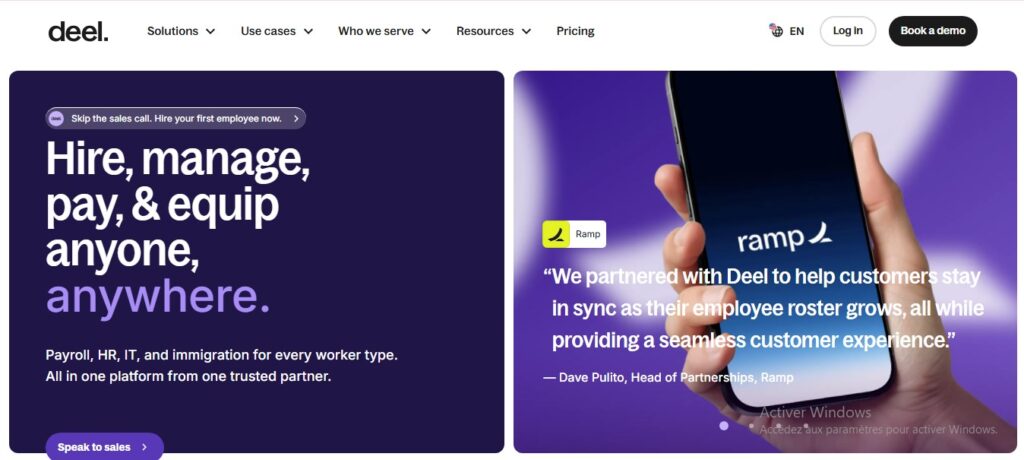
Best for: Companies hiring internationally without local entities. Pricing: Deel HR is free for unlimited employees; contractor management starts at $49/contractor/month; Global Payroll (for countries where you already have an entity) starts at $29/employee/month; full Employer of Record starts at $599/employee/month, with enterprise EOR tiers running higher.
Deel is the platform I point people to first when they say “we want to hire someone in a country we’ve never operated in.” The catch that trips up first-time buyers: Deel typically requires a one-month gross salary deposit per EOR employee, refunded after offboarding, and currency conversion carries its own markup. Budget for the real number, not the headline number.
- ✓ 150+ countries covered
- ✓ Free HR/HRIS tier
- ✓ Strong compliance infrastructure
- ✗ Salary deposit ties up cash
- ✗ FX markups aren’t itemized
- ✗ Gets pricey at scale
2. BambooHR

Best for: Small to mid-sized businesses moving off spreadsheets. Pricing: No public rate card, but current buyer reports put the entry Core plan around $10/employee/month (with a roughly $250/month floor for teams under 25), and higher tiers with performance management and analytics landing around $17–$25/employee/month.
I’ve watched three different startups roll out BambooHR, and the HR team always exhales with relief afterward — it just works. The ATS lives in the higher tier now, not the entry plan, so confirm which features are actually bundled before you sign; BambooHR restructured its tiers in the last couple of years and some long-time customers got moved around without realizing it.
- ✓ Genuinely intuitive UI
- ✓ Strong automation
- ✓ Solid integrations
- ✗ ATS gated to higher tier
- ✗ US-only native payroll
- ✗ Too simple for enterprises
3. Lattice

Best for: Companies building a real, continuous feedback culture. Pricing: Entry-level pricing around $11/person/month for the performance and OKR bundle, scaling up with engagement surveys, career development, and compensation add-ons.
Lattice goes deep on the “boss tells employee what to do” to “genuine coaching culture” transition. It offers 360-degree reviews, engagement surveys, and one-on-one tools that actually get used, not just installed and forgotten. Managers coming from an annual-review-only culture need a real onboarding runway here — the continuous-feedback model is a mindset shift, not just a software swap.
- ✓ Clean, pleasant UX
- ✓ Real-time feedback loops
- ✓ Robust analytics
- ✗ Pricey for very small teams
- ✗ Adoption curve for managers
- ✗ Not a full payroll/HRIS
4. monday.com

Best for: Teams who want to build their own talent workflows from scratch. Pricing: Starts around $12/seat/month (minimum seat counts apply), with free trial available.
monday.com isn’t a traditional HR system — it’s a Work OS you bend into whatever shape you need. Want a hiring pipeline board? Build one. Want to map skills across teams? You can, but you’re building the HR template yourself, or borrowing one from the community template gallery. If your org hates rigid, opinionated software, this flexibility is the whole appeal. If your HR team wants something pre-built, look elsewhere.
- ✓ Fully customizable
- ✓ Powerful automations
- ✓ Visual dashboards
- ✗ Not HR-specific out of the box
- ✗ Learning curve for admins
- ✗ You build the templates
5. Rippling

Best for: Companies wanting HR, IT, and finance in one connected system. Pricing: Core HR starts around $8/employee/month plus a roughly $35/month base platform fee. Payroll, IT device management, and benefits are separate modules, each with their own per-employee charge — most companies running HR plus payroll land somewhere between $25 and $50 per employee per month once modules stack up.
Rippling’s real magic is automation: hire someone, and it can provision their laptop, payroll, benefits, and Slack account almost instantly. Just don’t budget off the $8 headline number — that’s the base layer, not the finished stack. Ask for a full module-by-module quote before you commit.
- ✓ Best-in-class automation
- ✓ One source of truth for people data
- ✓ IT + HR synergy
- ✗ Opaque, modular pricing
- ✗ Annual contract lock-in
- ✗ Costs compound fast with add-ons
6. Remote.com

Best for: Distributed teams needing a reliable EOR without Deel’s cash-flow demands. Pricing: Contractor management starts around $29/month per contractor, with EOR and global payroll priced by country and quoted directly.
You can’t develop talent you can’t legally employ, and Remote’s whole pitch is operational stability for cross-border teams. It’s often mentioned in the same breath as Deel, and worth a side-by-side quote request — the two frequently trade places on price depending on which countries you’re hiring in.
- ✓ Broad global coverage
- ✓ Multi-currency payments
- ✓ Straightforward contractor tools
- ✗ Learning curve for new admins
- ✗ EOR pricing requires a quote
- ✗ Cheaper niche options exist
7. Workday

Best for: Large, complex organizations with global workforces. Pricing: Fully custom — Workday doesn’t publish a rate card, and implementation is quoted separately from licensing.
Workday is the 800-pound gorilla, and its Skills Cloud genuinely changes how leadership understands workforce capability. But go in with eyes open: implementation is heavy, often stretching six months to a year for larger rollouts, and you’ll need a dedicated internal team to see it through. This isn’t a tool you buy on a Tuesday and launch by Friday.
- ✓ Deep skills analytics
- ✓ Scales to the most complex orgs
- ✓ Strong global compliance
- ✗ Serious investment
- ✗ Heavy implementation
- ✗ Total pricing opacity
8. Keka

Best for: Mid-sized organizations in India and emerging markets. Pricing: Plans start around ₹6,999/month, with a free trial available.
Keka has become the default upgrade for growing Indian companies moving beyond basic payroll software, and its compliance engine — PF, ESI, professional tax, TDS — is built for local reality rather than bolted on afterward. The mobile app is genuinely well-used by employees, which is rarer than it should be in this category.
- ✓ Deep Indian compliance
- ✓ Strong mobile experience
- ✓ Competitive pricing
- ✗ Not built for global expansion
- ✗ Complex customization needs dev help
9. PeopleStrong: Asia’s HCM Leader
Best for: Large enterprises across Asia-Pacific. Pricing: Custom, quoted per organization.
PeopleStrong’s strength is talent matching and career pathing at scale — for companies managing thousands of employees where visibility into skills and succession genuinely matters, this delivers. Where it lags is the third-party integration ecosystem, which is thinner than what you’ll find with Workday or Rippling. Ask for a detailed integration map before you commit if your stack is already complex.
- ✓ AI-driven talent matching
- ✓ Strong regional compliance
- ✗ Fewer pre-built integrations
- ✗ Implementation often needs customization
10. ClearCompany
Best for: Organizations that want hiring data directly connected to performance outcomes. Pricing: Custom, no free trial.
ClearCompany connects the whole lifecycle so you can actually answer “did we hire the right person, and are they succeeding?” instead of guessing. The unified talent profile is genuinely useful for retention analysis, but the configurability that makes it powerful also means the advanced features take real time to master — plan for a proper onboarding runway with your implementation team.
- ✓ No silos between hiring and HR
- ✓ Configurable workflows
- ✗ Advanced features take time to master
- ✗ Premium features cost extra
11. Workable

Best for: Data-driven recruiting teams. Pricing: Starts around $189/month, with a free trial available.
A weak hire undermines your entire talent strategy, and Workable’s structured hiring workflows exist to prevent that. Its AI candidate matching finds people you’d miss with keyword search alone, and the collaborative interview kits keep hiring managers actually engaged instead of ghosting the process halfway through.
- ✓ Smart AI candidate matching
- ✓ Plays well with job boards
- ✗ Gets expensive at enterprise scale
- ✗ Plenty to configure up front
12. Paycor

Best for: Mid-sized businesses wanting integrated HR and payroll. Pricing: No longer published; third-party pricing trackers estimate roughly $19–$27 per employee/month, often with an additional setup fee equal to 10–20% of the annual contract.
Paycor links compensation directly to performance without dragging you into full enterprise-HCM complexity. On-demand pay is a standout feature employees actually notice and appreciate. Just budget for that setup fee — it’s easy to miss when you’re comparing headline per-employee numbers across vendors.
- ✓ Unified HR + payroll + talent
- ✓ On-demand pay is popular
- ✗ No public pricing
- ✗ Setup fee catches buyers off guard
13. Dayforce
Best for: Companies that need real-time workforce insights instead of month-end reports. Pricing: Custom, no free trial.
Dayforce runs on a single-database model, so payroll, scheduling, and performance data stay current instead of waiting for a nightly batch job. In a business environment that moves this fast, that’s not a nice-to-have — it’s the difference between reacting to a labor cost problem and seeing it coming. Some users flag inconsistent support response times, so ask about your dedicated account team before signing.
- ✓ Genuinely real-time data
- ✓ Unified employee record
- ✗ Reporting can feel dense
- ✗ Support consistency varies
14. iCIMS Talent Cloud

Best for: Large organizations with high-volume recruiting needs. Pricing: Custom, no free trial.
If you’re hiring hundreds or thousands of people a year, iCIMS is built for that specific pressure. Candidate relationship management, employer branding tools, and offer management scale with volume in a way most ATS platforms simply don’t. It’s overkill — genuinely, not just as a caveat — for a company hiring under 50 roles a year.
- ✓ Massive partner ecosystem
- ✓ Handles enormous volume
- ✗ Intimidating for beginners
- ✗ Overkill for small teams
15. ZipRecruiter

Best for: Small to medium businesses needing fast candidate sourcing. Pricing: ZipRecruiter doesn’t publish fixed rates; buyer-reported estimates put Standard plans around $299–$399/month per job slot, Premium around $419–$519, and Pro up to $899. The trial window has shrunk to roughly 2–4 days and now requires a card on file.
ZipRecruiter is a hiring marketplace built for velocity — its AI pushes your listing to hundreds of job boards and matches you to candidates automatically. If you’re running five open roles at once, though, the per-slot pricing multiplies fast; do the math before you commit to a multi-slot plan.
- ✓ Massive distribution reach
- ✓ Easy setup
- ✗ Costs multiply per open role
- ✗ Very short trial now requires a card
16. Trakstar Hire

Best for: Teams wanting a straightforward, collaborative ATS. Pricing: Custom, with a free trial available.
Trakstar Hire (formerly Recruiterbox) is a good fit for teams graduating from chaotic email-chain hiring into an actual system. Interview scorecards and customizable career sites make the process feel organized without the intimidation factor of an enterprise ATS. Deep analytics for high-volume recruiters aren’t its strength — that’s the trade-off for the simplicity.
- ✓ Easy for the whole team to use
- ✓ Good interview scorecards
- ✗ Limited deep analytics
- ✗ Fewer integrations on basic plans
17. Sage HR

Best for: Small teams needing core HR with performance basics. Pricing: Starts around £4/employee/month, with a free trial available.
Not every company needs a massive suite, and Sage HR is the honest answer for teams that don’t. Leave tracking, performance reviews, and an employee database cover the essentials without the price tag or implementation weight of the bigger platforms on this list. The trade-off is a smaller integration ecosystem — check your must-have integrations before committing.
- ✓ Very affordable
- ✓ Easy to learn
- ✗ Limited depth for larger companies
- ✗ Smaller integration ecosystem
How Much Does Talent Management Software Actually Cost?
Most platforms use a per-user, per-month pricing model, but the “starting price” you see marketed rarely matches what you’ll actually be invoiced.
- Entry-level ($6–$12/user/month): Basic HRIS, leave tracking, simple reviews. Good for small teams — think Sage HR, BambooHR’s entry tier, or Rippling’s base layer.
- Mid-market ($12–$30/user/month): Performance management, goal tracking, engagement tools, deeper analytics — Lattice, Paycor, and fully-loaded BambooHR live here.
- Enterprise (custom, often $30+/user/month equivalent): Full HCM suites, succession planning, global payroll, AI insights — Workday, Dayforce, iCIMS.
Always ask, specifically, about implementation fees, minimum seat requirements, base platform fees layered on top of per-user pricing, and what happens to your rate at renewal. Several vendors in this list — Rippling and BambooHR among them — bill a flat base fee in addition to per-employee pricing, which changes the real math for very small teams.
How to Choose the Right Platform for You
- Know your pain point. Losing people because they don’t see a future? Look at Lattice or PeopleStrong. Payroll a mess? Rippling or Paycor. Hiring globally and worried about compliance? Deel or Remote.
- Involve the actual users. Ask your managers and HR team what they hate about the current process — buy the tool that fixes those specific hates, not the one with the flashiest demo.
- Check integrations before you sign. Slack, payroll, finance — confirm the connection exists and actually works, not just that it’s “on the roadmap.”
- Take trials seriously. Run a mock performance cycle. Onboard a fake employee. See if it feels natural, not just functional.
- Think two years out. You might be 50 people now — what about 150? Pick something that scales without forcing a painful migration.
If you’re also tackling structured pay bands and merit cycles alongside performance software, my guide to compensation management software covers that layer in more depth. And if learning and development is your next priority after fixing hiring or performance, the best employee training software for 2026 picks up right where this guide leaves off.
FAQ
What’s the difference between talent management and performance management?
Performance management is one piece of the puzzle — evaluating and improving employee performance through reviews and feedback. Talent management is the whole picture: recruiting, onboarding, performance, learning, succession, and compensation, all connected.
What’s the cheapest way to get started with talent management software?
Sage HR (from roughly £4/employee/month) and BambooHR’s entry tier (around $10/employee/month, with a flat rate for very small teams) are the most budget-friendly starting points for small businesses that just need core HR functions.
Is Deel or Remote.com better for hiring internationally?
Both are strong, and pricing regularly trades places depending on which countries you’re hiring in. Deel has broader coverage and a free HR tier, but its salary-deposit requirement ties up more cash upfront than Remote typically does. Get quotes from both before deciding — the “better” platform genuinely depends on your specific country mix.
Do I need a full HCM suite like Workday if I’m under 500 employees?
Probably not. Workday and Dayforce are built for organizational complexity that most sub-500-employee companies don’t have yet. Rippling, BambooHR, or Paycor will typically cover your needs at a fraction of the implementation cost and timeline.
Which platform is best for high-volume recruiting?
iCIMS Talent Cloud is purpose-built for companies hiring hundreds or thousands of roles a year. For smaller-scale but still active hiring, Workable or ZipRecruiter cover most needs without iCIMS’s enterprise complexity or cost.
Conclusion
Talent management platforms are just tools. They automate the paperwork, surface the data, and nudge managers toward better conversations — but they can’t replace the conversations themselves. The best investment you can make is in a platform that frees your HR team up to do what they actually do best: connect with people, understand what they want out of their careers, and help them get there.
Start with your biggest pain point, get real quotes from two or three platforms on this list, and take the trial seriously before you sign anything.