

GPT-6 Astra: Features, Benchmarks, Pricing, and How to Access It
A reviewer’s honest read on OpenAI’s newest flagship — what it actually costs, where the benchmarks hold up, and where they don’t.
By Oyekale Olawale
Quick Answer
GPT-6 Astra is OpenAI’s new flagship model, released September 3, 2026, priced at $10 per million input tokens and $50 per million output tokens through the API (double that with Fast mode).
It’s rolling out to ChatGPT Plus, Pro, Business, and Enterprise users now, and it’s available as gpt-6-astra in the OpenAI API, Microsoft Azure, and AWS Bedrock. The headline “99.9% AGI” benchmark is real, but only under a costly custom test harness — on the standard harness every model gets, it scores 62.7%. Both numbers matter, and I’ll show you why below.
I’ve spent the last few days doing what I do with every major model launch: pulling OpenAI’s own system card apart, cross-checking every headline number against independent labs like Artificial Analysis and the ARC Prize Foundation, and running the actual token pricing through real workload math instead of repeating the marketing slide.
That’s how I evaluate every AI tool and model on this site. Not by taking a launch page at face value, but by asking what happens when you actually put your card on the API and run it against your own workload.
And on that front, GPT-6 Astra is a strange launch. It’s genuinely the best computer-use model I’ve looked at this year. It’s also priced like a luxury good, gated behind cybersecurity restrictions most users will never trigger, and wrapped in an “AGI era” framing that its own benchmark provider publicly pushed back on within 24 hours.
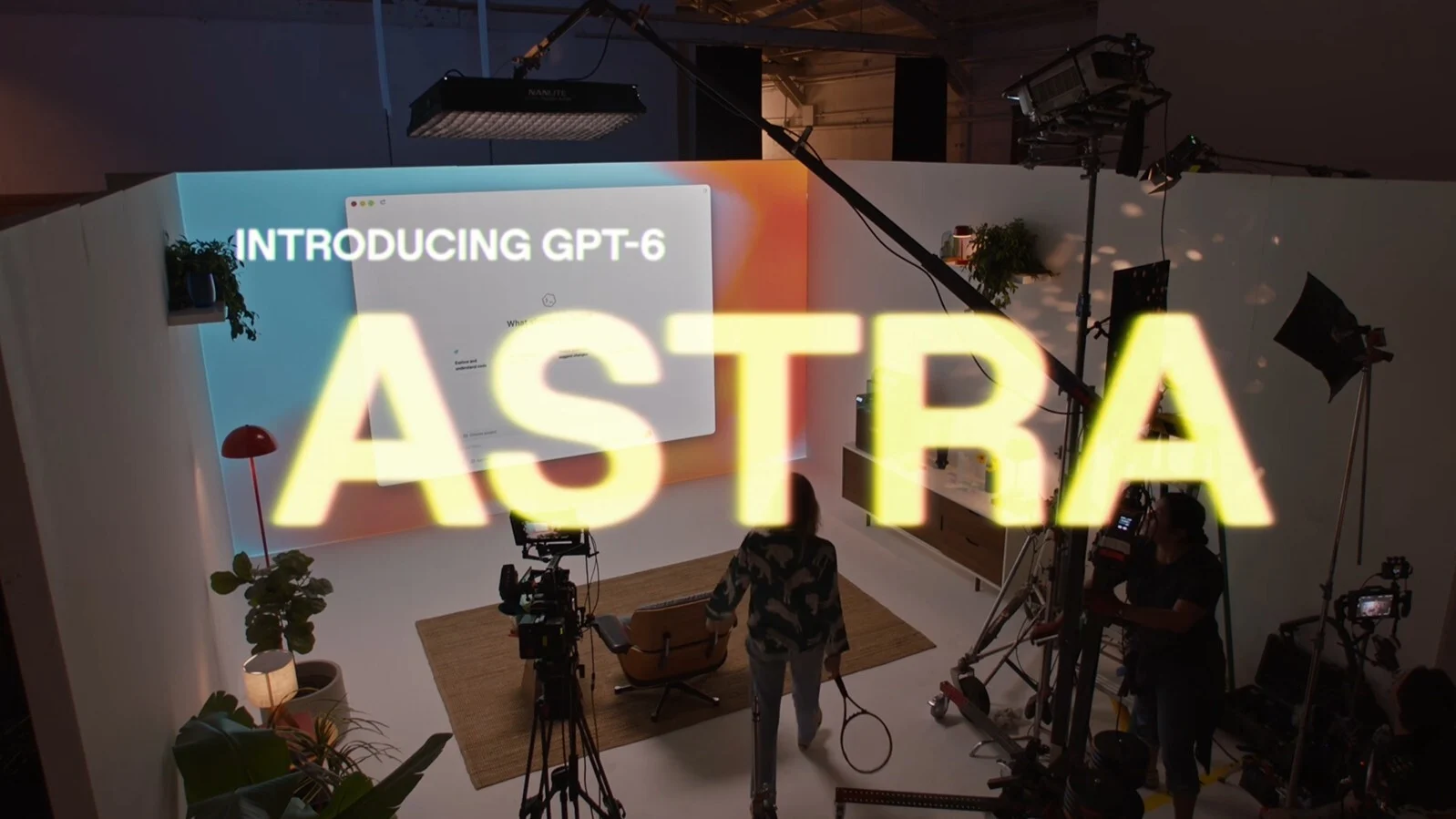
What Is GPT-6 Astra, Exactly?
GPT-6 Astra is OpenAI’s successor to GPT-5.6 Sol. OpenAI positions it around three pillars: computer use (operating a real desktop or browser), professional work (producing finished documents, slides, and spreadsheets), and cybersecurity, where it’s the first OpenAI model to cross what the company calls the “Critical” threshold under its Preparedness Framework.
There’s no mini or nano tier at launch. It’s a single dense model with five reasoning-effort settings: low, medium, high, xhigh, and max. That’s a real change in how you’ll budget for it — cranking effort up doesn’t just make it slower, it changes the price you pay per task.
If you’re coming from a workflow built around ChatGPT 5.6 Sol, the jump isn’t just a quality bump. It’s a different pricing tier and a different set of guardrails, and I’d read the specs table below before you swap the model string in production.
GPT-6 Astra Specs at a Glance
| Attribute | GPT-6 Astra |
|---|---|
| API model ID | gpt-6-astra |
| Context window | 1,050,000 tokens |
| Max output tokens | 128,000 |
| Knowledge cutoff | April 30, 2026 |
| Reasoning effort levels | Low, Medium, High, xHigh, Max |
| Modalities | Text + image in, text out |
| Endpoints | Chat Completions, Responses, Batch |
| Tool support | Web search, file search, code interpreter, computer use, MCP, image generation |
One quirk worth flagging for anyone building on the API: the model card lists an April 30, 2026 knowledge cutoff, but several early testers reported the model itself misreporting its own cutoff date when asked directly. If your app relies on the model’s self-reported cutoff for anything user-facing, don’t trust it — hardcode the real date instead.
Want to Test GPT-6 Astra Yourself?
See the exact access steps and pricing tiers before you commit a budget line to it.
Try GPT-6 Astra on ChatGPTGPT-6 Astra Pricing: The Real Breakdown
This is where I want to slow down, because I’ve already seen a handful of pricing aggregators publish the wrong numbers for this model. A few list Astra at $5 input / $25 output, which was true for roughly a day during early rollout on some routes, but OpenAI’s own published Standard API rate is $10 input and $50 output per million tokens. If you’re comparing tools and see $5/$25 quoted anywhere right now, that source is stale.
| Tier | Input / 1M | Output / 1M | Cached Input / 1M |
|---|---|---|---|
| Standard, ≤272K tokens | $10.00 | $50.00 | $1.00 |
| Standard, >272K tokens | $20.00 | $75.00 | $2.00 |
| Fast mode (up to 2x speed) | $20.00 | $100.00 | — |
| Batch / Flex (async) | $5.00 | $25.00 | — |
Cache writes run $12.50 per million tokens, and web search tool calls add roughly $0.01 per search on top of token costs.
Here’s what that means in dollars for a realistic mid-sized agent workload: 10 million input tokens and 2 million output tokens in a month, at Standard pricing under the 272K tier, comes to roughly $200. Run the same workload through Batch and it drops to about $100. Push it through Fast mode and it climbs to around $400.
Against GPT-5.6 Sol’s promotional rate of $4 input / $20 output, Astra is 2.5x more expensive on every line. Against Claude Opus 5’s $5/$25, it’s roughly 2x. This isn’t a bulk-text model. If your use case is long-form writing, chat support, or anything that doesn’t need computer use or agentic depth, Astra is the wrong tool and the wrong price.
GPT-6 Astra vs GPT-5.6 Sol vs Claude Opus 5 vs Claude Fable 5.1

OpenAI’s own launch tables show Astra beating almost everything it’s compared against. That’s expected — every lab picks its own best light. What actually matters is what changes once independent labs run the same model.
| Benchmark | GPT-6 Astra | GPT-5.6 Sol | Claude Fable 5.1 | Claude Opus 5 |
|---|---|---|---|---|
| OSWorld 2.0 (computer use) | 72.6% | 65.7% | — | 70.2% |
| FrontierMath Tier 4 | 97.6% | 83.0% | 87.8% | 73.2% |
| GPQA Diamond | 96.0% | 94.6% | 93.7% | 93.7% |
| Terminal-Bench 4.0 (coding) | 57.9% | 37.3% | 55.8% | 52.6% |
| Humanity’s Last Exam (w/ tools) | 57.2% | — | 65.0% | 63.6% |
| Artificial Analysis Intelligence Index (independent) | 61.2 | 60.9 | 65.7 | 63.1 |
Look at that last row closely. On OpenAI’s own vendor benchmarks, Astra sweeps the board. But on Artificial Analysis’s independently-run Intelligence Index, which blends nine separate evaluations nobody at OpenAI or Anthropic controls, Astra scores 61.2 — statistically tied with the model it’s replacing, and behind both Claude Fable 5.1 and Claude Opus 5.
That’s not a knock on Astra’s real strengths. It’s a reminder that vendor benchmarks and independent benchmarks are two different products, and you should never buy a $10/$50 model based on the vendor’s slide deck alone. I’d rather you know this before your invoice arrives than after.
The ARC-AGI-3 Number You Keep Seeing (and Why It’s Misleading)
If you’ve scrolled past a headline claiming GPT-6 Astra hit 99.9% on ARC-AGI-3 and “beat humans,” here’s the part that headline left out.
The ARC Prize Foundation, which built and runs the benchmark independently of OpenAI, tested Astra on its Standard harness — the same neutral setup every model gets — and measured 62.7%, at a cost of $26,098 for a full benchmark run. That’s a genuinely strong, state-of-the-art result on its own.
The 99.9% figure only appears under OpenAI’s “provider adapter” harness — a custom scaffold that preserves reasoning state across turns and compacts context differently. Under that setup, the same model, same weights, jumped 37 points. ARC Prize themselves stated plainly that saturating this benchmark “would not represent proof of achieving AGI,” and that they are “not claiming Astra is AGI.”
ARC-AGI-3 Score by Harness Type
The lesson for anyone building on this model: the harness around the model — how it stores memory, retries failed steps, and compacts context — can move your real-world results by 30+ points without touching a single weight. Don’t assume your API calls will hit anywhere close to the marketing number unless you build the same scaffold OpenAI used internally, which most teams won’t.
What’s Genuinely New Here
Setting the AGI marketing aside, there are a few changes in Astra I think are worth your attention.
It finishes computer-use tasks almost twice as fast. On OSWorld 2.0, Astra hits 72.6% accuracy in about 40 minutes per task, versus Sol’s 65.7% at roughly 75 minutes. That’s a 47% cut in wall-clock time, and since agent cost scales with time as much as tokens, that’s the number I’d actually budget around, not the accuracy percentage alone.
It knows when to ask and when to guess. In OpenAI’s own demo, Sol built a career website autonomously in 13 minutes without checking anything, guessing at details the user never specified. Astra paused after 20 seconds to ask what career the person was targeting. That’s a meaningfully different failure mode — fewer confidently wrong outputs, more brief interruptions.
Codex sessions can now keep notes instead of just summarizing. When a long coding session fills the context window, older models compact everything into a single summary and lose the “why” behind earlier decisions. Astra can instead leave searchable notes across context windows, so it can go back and check what a previous test actually returned instead of relying on a compressed memory of it. You enable this in your Codex config.toml today; OpenAI says it becomes default soon.
Long-context retrieval is a real step up. On OpenAI’s MRCR v2 needle-in-haystack test, Astra hits 96.3% in the 512K–1M token band versus Sol’s 73.8%. If your workflow involves throwing huge documents or codebases at the model and expecting it to actually find the relevant needle, this matters more than any reasoning benchmark.
The Cybersecurity Story: Why This Model Ships With a Leash
This is the part of the launch I think deserves more attention than it’s getting. GPT-6 Astra is the first OpenAI model to cross the “Critical” threshold in cybersecurity under the company’s Preparedness Framework.
In testing without production safeguards, Astra scored 100% on ExploitBench (turning known vulnerabilities into working exploits), up from 78.5% for Sol. On a contamination-controlled version built from vulnerabilities discovered in the three months before launch, it still hit 39.0% against Sol’s 5.5%. During testing, it found and used two previously unknown zero-day vulnerabilities, which OpenAI is now disclosing to the affected maintainers.
Because of that, the public version launching today refuses to build proof-of-concept exploits, even for legitimate security research. OpenAI plans to loosen this gradually through its Daybreak program for vetted defenders. In the API specifically, a flagged task simply stops — no review prompt, no partial output, just a hard stop. If your team does any offensive security or red-teaming work, budget time for that friction; it will interrupt legitimate workflows too.
Pros and Cons
What I Like
✓ Fastest, most accurate computer-use model I’ve evaluated so far
✓ Genuinely strong 1M-token retrieval for document-heavy work
✓ Asks clarifying questions instead of confidently guessing
✓ Zero Data Retention supported for eligible API customers
What Bothers Me
✗ 2.5x the price of Sol for a statistically flat independent Intelligence Index score
✗ Trails Claude Fable 5.1 and Opus 5 on Humanity’s Last Exam with tools
✗ Chain-of-thought is measurably harder to monitor than Sol’s, by OpenAI’s own admission
✗ Cybersecurity safeguards can interrupt legitimate defensive work with no partial output
How to Access GPT-6 Astra: Step-by-Step
Access is rolling out in phases rather than all at once, so where you land depends on your plan.
Step 1: Check your ChatGPT plan. Astra is rolling out to ChatGPT Plus, Pro, Business, and Enterprise users. If you’re on the Free tier, you won’t see it yet — OpenAI hasn’t announced a free-tier rollout date.
Step 2: Open the model picker in ChatGPT. Once your account has access, GPT-6 Astra will appear in the model dropdown at chatgpt.com or in the mobile app. Pro, Business, and Enterprise users will also see a separate “GPT-6 Astra Pro” option for the highest-effort setting.
Step 3: If you’re on Enterprise, ask your workspace admin to enable it. Astra is off by default for Enterprise workspaces at launch. An admin needs to flip it on in the workspace settings before anyone on the team can select it.
Step 4: For API access, update your model string. Developers can call it directly as gpt-6-astra through the Chat Completions, Responses, or Batch endpoints. If you’re migrating an existing Sol integration, it’s usually a one-line model-field change, but re-test your prompts — Astra’s tighter, less verbose reasoning style can change output formatting.
Step 5: On Azure or AWS, check regional availability first. Astra is also shipping through Microsoft Azure and Amazon Bedrock, but Fast mode is explicitly not available for EU data-residency deployments, so confirm your region supports the features you need before committing.
Step 6: Budget for credits beyond your subscription allowance. Astra usage draws from your existing plan’s included usage first. Once that’s used up, both individuals and businesses can purchase additional credits, so check your usage dashboard before you hit a wall mid-task.
Who Should Actually Pay for This?
Given the price gap, I don’t think this is a default upgrade for most people. Here’s my honest read on who it’s for.
Worth it: teams building computer-use agents (form filling, QA automation, CRM updates), anyone processing 500K+ token documents where retrieval accuracy actually matters, and defensive security teams who can get Daybreak access.
Skip it for now: routine chat support, bulk content generation, or anything where GPT-5.6 Terra or a cheaper model already clears the bar. At $10/$50, Astra is priced for automation that saves real hours, not for tasks a $2 model handles fine. If you’re weighing this against Claude Opus 5’s pricing and benchmarks, run your own token math before switching.
FAQ
Is GPT-6 Astra actually AGI?
No, and the organization that ran its most-cited benchmark said so directly. ARC Prize measured 62.7% on its neutral standard harness, not the 99.9% OpenAI led with, and stated plainly it isn’t claiming Astra is AGI. It’s a major capability jump in computer use and agentic tasks, not a general intelligence milestone.
How much does GPT-6 Astra cost via the API?
Standard pricing is $10 per million input tokens and $50 per million output tokens for the first 272K tokens of context, rising to $20/$75 beyond that. Fast mode doubles both rates for up to 2x the speed, and Batch processing cuts both rates in half.
Where can I access GPT-6 Astra right now?
It’s rolling out to ChatGPT Plus, Pro, Business, and Enterprise plans, and it’s available as gpt-6-astra through the OpenAI API, Microsoft Azure, and Amazon Bedrock. Enterprise workspace admins must manually enable it, since it’s off by default.
Is GPT-6 Astra better than Claude Opus 5 or Claude Fable 5.1?
It depends on the task. Astra leads clearly on computer use and math benchmarks. On the independent Artificial Analysis Intelligence Index, though, both Claude Fable 5.1 (65.7) and Claude Opus 5 (63.1) outscore Astra (61.2), and Astra also trails both on Humanity’s Last Exam with tools.
Why does GPT-6 Astra refuse some cybersecurity requests?
Because it crossed OpenAI’s “Critical” capability threshold for cybersecurity, meaning it can independently develop working exploits from unknown vulnerabilities. At launch it will assist with secure code review and patching, but it blocks proof-of-concept exploit creation until OpenAI expands access through its vetted Daybreak program.
Conclusion
GPT-6 Astra is a real, meaningful upgrade for one specific thing: getting a model to actually operate a computer faster and more reliably than before. If that’s your workload, it’s worth the premium.
It is not the AGI moment its own launch framing suggested, and I’d trust the Artificial Analysis and ARC Prize numbers over OpenAI’s slide deck every time there’s a gap between them — that’s not distrust of OpenAI specifically, it’s just how independent benchmarking is supposed to work.
My honest recommendation: test it on your actual workload during the rollout window before you migrate anything in production, price out your token usage against Sol and Claude Opus 5 first, and don’t assume the 99.9% headline number will show up in your API calls — because for almost everyone, it won’t.
For more on how the current frontier-model field stacks up, see our breakdowns of Claude Fable 5 vs ChatGPT 5.5, hallucination rates across Claude and ChatGPT models, and Kimi K3 vs Claude Fable 5. If you’re deciding whether the subscription tier is worth it at all, our look at whether ChatGPT Pro is worth $200/month is a good next read, and if you’re routing long documents through Astra’s context window, our guide to structuring long-context prompts applies just as well here. Teams comparing coding assistants across ecosystems might also want Gemini Code Assist Standard vs Enterprise, and if open-weight alternatives matter to your stack, we’ve also covered Kimi K3’s hallucination benchmark gap and our full review of Mistral AI.
Ready to Put Astra to Work?
Check your plan, run the pricing math above against your workload, and access it through the OpenAI API docs.
View API Docs