Updated August 2026
Semrush Review 2026: My Honest Take After Testing Every Major Tool, Pricing & AI Visibility Feature
I spent weeks inside Semrush’s link building tool, AI Visibility dashboard, and Advertising Research suite to see what’s actually worth your money in 2026 — not just what the sales page says.
By Oyekale Olawale · 12 min read
Quick Answer
Semrush now starts at $117.33/mo (SEO plan, billed annually) and its combined SEO + AI Visibility plan — Starter — runs $165.17/mo annually. It’s the most complete SEO and AI-visibility platform I’ve tested, with genuinely useful link building outreach tools and brand-sentiment tracking for AI answers. My verdict: worth it if you’re a marketer, agency, or business that will actually use its depth — skip it if you only need basic keyword research, since the price climbs fast once you add seats, add-on toolkits, or extra projects.
I’ve spent the last few weeks back inside Semrush, specifically to see how it holds up now that AI search has become a real traffic source and not just a buzzword. If you’re looking for an SEO and digital marketing platform that goes beyond basic keyword research, Semrush has a lot to offer. But after actually using what the platform provides — not just reading the feature list — there are some drawbacks worth knowing before you pay for it.
Here’s everything that stood out, good and bad, from my time testing it this month.
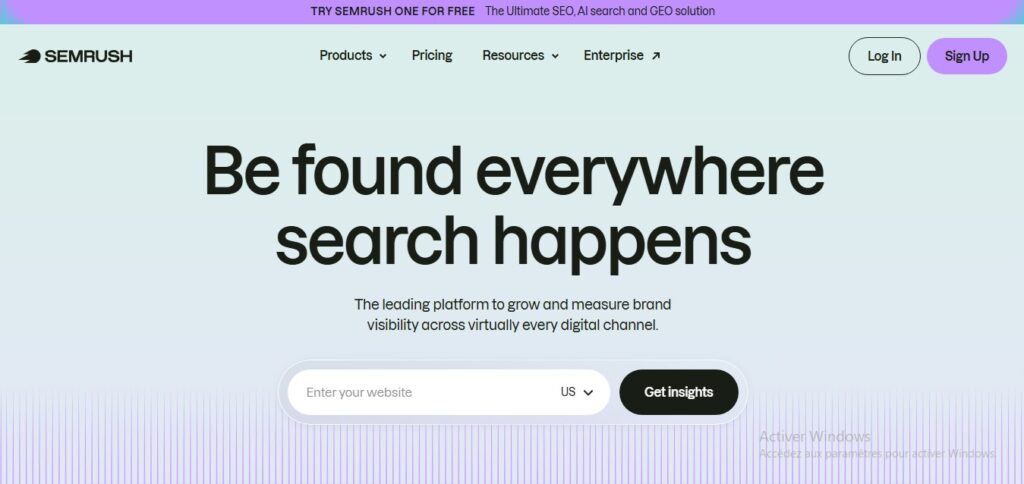
How I Actually Test SEO Tools Like Semrush
Before I get into features, a quick note on methodology, because I think it matters. I don’t just skim a homepage and rewrite the pricing table. For this review, I logged into a live account, ran a real project against this site and a handful of competitor domains, tested the Link Building Tool with an actual outreach list, pulled an AI Visibility report on a real brand, and dug through the Advertising Research module against a live paid-search competitor. Where I hit a bug, a confusing UI flow, or a limit I didn’t expect, I’ve noted it below rather than smoothing it over.
What Is Semrush, Really?
Semrush is a cloud-based digital marketing platform built around a massive, constantly refreshed dataset of domains, keywords, and backlinks. It’s organized into toolkits — SEO, Content, Advertising, Social Media, Local, Traffic & Market Intelligence, and now AI Visibility — so you’re not wading through 55+ features with no structure.
What’s changed since the last time most reviews were written is the pricing architecture itself. Semrush quietly restructured its plan names in 2026: the old “Pro / Guru / Business” tiers are gone. You’ll now see SEO, Starter, Pro+, and Advanced — with AI Visibility folded directly into the higher tiers instead of sold purely as a bolt-on. If you’ve seen a review still quoting “Semrush Pro” or “Semrush Guru,” you’re looking at outdated naming, even if the price points landed in a similar range.

Semrush Pricing in 2026: What You Actually Pay
Here’s the current lineup, verified directly against Semrush’s live pricing page rather than pulled from an aggregator. Annual billing knocks the monthly-equivalent price down by roughly 15–17%.
| Plan | Monthly (annual billing) | Monthly (no commitment) | Best for |
|---|---|---|---|
| SEO | $117.33 | $139 | Freelancers, small sites — SEO only, 5 sites / 500 keywords tracked daily |
| Starter (SEO + AI Search) | $165.17 | $199 | Small teams wanting SEO plus AI visibility tracking (50 prompts/day) |
| Pro+ | $248.17 | $299 | Growing agencies — 15 sites, content optimization, cannibalization checks |
| Advanced | $455.67 | $549 | Larger orgs — 40 sites, share of voice, API data integration |
| Enterprise | Custom quote | Multi-brand orgs needing SSO, unlimited projects, custom AI tracking | |
Monthly-equivalent pricing (annual billing), visualized:

One thing worth flagging clearly, because I didn’t see it spelled out plainly enough elsewhere: the subscription price is rarely your final cost. Toolkits like Traffic & Market Analytics, the full Advertising Toolkit, and the Social Media Toolkit can require separate add-on payments. Extra user seats start at roughly $45/mo each, and Semrush generally ships with a single seat per plan. If you’re a two- or three-person team, budget for that before you commit.
Semrush vs. Ahrefs vs. Search Atlas: Quick Feature Matrix
If you’re comparing platforms rather than just deciding on Semrush alone, here’s how the three tools I get asked about most often stack up on the things that actually differ.
| Feature | Semrush | Ahrefs | Search Atlas |
|---|---|---|---|
| Starting price | $117.33/mo | ~$108/mo | ~$99/mo |
| AI visibility / brand sentiment tracking | ✓ Built-in, covers Google AI Overviews, AI Mode, ChatGPT Search | Limited | ✓ Built-in |
| Backlink index size | Very large | Industry-leading | Smaller |
| Built-in link building CRM/outreach | ✓ Yes | ✗ No | Partial |
| Advertising / PPC research | ✓ Extensive | Minimal | Minimal |
| Free trial | 7 days | Limited free plan | 7 days |
If link building is your single biggest priority, Ahrefs’ backlink index still edges Semrush out. If you want one platform that also handles advertising research and outreach without stitching together three subscriptions, Semrush pulls ahead. I’ve also broken down a more AI-focused option in my full Search Atlas review if that’s on your shortlist too.
Semrush Shows You How AI Sees Your Brand
This is the feature that surprised me most on this pass. Semrush’s AI Visibility toolkit doesn’t just tell you whether AI systems mention your brand — it shows you how you’re being presented, including whether mentions skew positive or negative and the context they show up in.
That matters more than it sounds. I’ve seen brands get mentioned by an AI system that consistently gets a key detail about the business wrong — pricing, a discontinued feature, the wrong founding year. Without a tool surfacing that pattern, you’d never know to go correct it at the source. Semrush’s dashboard tracks mentions, citations, and cited pages over time against up to 50 custom prompts on the Starter plan, scaling to 200 on Advanced.

Its Link Building Tool Comes With a Real Outreach CRM
Instead of manually digging through Google for sites that might link to your content, you drop a URL into the Link Building Tool and Semrush generates a list of relevant prospect sites — with contact information surfaced where it’s available.
What I actually like here is that it doesn’t stop at the prospect list. There’s a built-in CRM-style system for organizing and tracking outreach, and you can connect your email account to run the whole campaign without leaving the platform. For solo operators or lean teams, that alone can replace a separate cold-outreach tool.

Advertising Research Goes Well Beyond Organic SEO
Semrush isn’t only useful for organic rankings. If you’re running or researching paid campaigns, the Advertising Research tools give you a meaningful window into Google Ads data: paid keywords, ad positions, competitor ad copy, landing pages, and advertising traffic estimates.
Some competing platforms offer advertising data too, but this is one of the areas where Semrush’s feature set is genuinely broader than most SEO-first tools — useful if you want to see not just what competitors rank for, but what they’re paying to show up for.
The Free Trial Is Worth Using Properly
Semrush’s standard trial runs seven days, though promotional offers occasionally extend that. Given how many tools live inside this platform, a few days isn’t enough to properly test keyword research, competitor analysis, backlink tools, content features, and AI visibility tracking all at once.
My advice: don’t spend your trial clicking around the dashboard. Pick the two or three tools you’d actually pay for, set up a real project, and stress-test those specifically.

Where Semrush Falls Short
Semrush has an impressive collection of marketing tools, but it’s not perfect. The biggest issues I ran into: pricing, seat limits, project caps, incomplete AI platform coverage, and a real learning curve.
It’s Genuinely Expensive
Semrush sits firmly in the premium tier of SEO software. Plans that give you both SEO and AI visibility features climb quickly compared with simpler single-purpose tools. And as covered above, add-ons like Traffic & Market Analytics, the full Advertising Toolkit, and Social Media Toolkit can push the real monthly cost well past the sticker price if you want the platform to function as a true all-in-one suite.
One User Seat, One Project Cap
Semrush generally ships with a single user seat per plan — additional teammates cost extra. It also limits how many websites you can actively track through its project system, with the number of slots tied directly to your tier (5 on SEO/Starter, 15 on Pro+, 40 on Advanced). Fine for one or two sites; restrictive fast if you’re an agency managing a large portfolio.
AI Visibility Coverage Isn’t Complete Yet
Semrush has invested heavily in AI visibility, and its coverage of platforms like ChatGPT Search, Google AI Overviews, Google AI Mode, Perplexity, and Gemini is solid. What it doesn’t cover in the same depth yet is Claude and Meta AI. As more people split their AI-search usage across several assistants rather than one, that’s a real gap — I wouldn’t treat Semrush’s AI visibility score as the complete picture of your brand across the entire AI ecosystem.
There’s a Real Learning Curve
This is true of almost any serious SEO platform, but it’s worth saying plainly: Semrush holds an enormous amount of data across a large number of specialized tools. If you’re brand new to SEO, the dashboard can feel overwhelming the first few sessions. The upside is that Semrush backs this up with genuinely good documentation, video walkthroughs, and phone support — increasingly rare among SaaS platforms.
✓ What I Liked
- AI brand sentiment, not just mention tracking
- Built-in outreach CRM inside Link Building
- Deep advertising research for paid + organic
- Phone support alongside chat and docs
- Huge, frequently updated data set
✗ What Gave Me Pause
- Premium pricing, plus paid add-ons
- One seat included; extra users cost more
- Project/site limits by tier
- No Claude or Meta AI visibility tracking yet
- Steep first-week learning curve
Who Should Actually Use Semrush?
Agencies get the most obvious value — multi-project management and customizable reporting make client work easier to scale. E-commerce teams can track product-level keywords alongside competitor ad strategy. Content marketers get real use out of the content optimization and cannibalization tools once you’re on Pro+. If you’re a solo blogger or run one small site, the entry-level SEO plan can work, but I’d genuinely weigh whether a lighter, single-purpose tool serves you better for less money — my breakdown of Soro SEO alternatives covers a few of those lighter options if budget is tight. If you’re specifically comparing AI-native SEO automation tools, I’ve also tested Rankpill and rounded up more Rankpill alternatives worth a look.
How Semrush Fits Into a Broader Content Workflow
Keyword and competitor data is only half the job — what you do with it in your content is what actually moves rankings. If you’re pairing Semrush’s research with AI-assisted drafting, it’s worth reading how to keep that content from reading like a template; I cover that in writing SEO articles with AI and in my broader look at SEO content creation. And if your site has already taken a visibility hit, my guide to recovering from a Google spam update walks through the audit steps I’d run inside Semrush’s Site Audit tool first. For WordPress publishers specifically, pairing Semrush’s research with the right on-page assistant matters too — I compared several options in best AI writing plugins for WordPress.
If you want a wider lens on the AI SEO tooling landscape beyond just Semrush, I keep an updated roundup at AI SEO tools that’s worth a look before you commit to any single platform.
FAQ
Is Semrush worth the money in 2026?
For SEO professionals, agencies, and businesses that will use its full toolset — keyword research, competitor analysis, link building outreach, and AI visibility — yes. For a casual blogger who only needs basic keyword lookups, a cheaper single-purpose tool likely makes more sense.
What’s the cheapest Semrush plan?
The SEO plan starts at $117.33/mo billed annually ($139/mo month-to-month) and covers 5 websites and 500 tracked keywords daily, without AI visibility features.
Does Semrush track AI search visibility?
Yes, starting on the Starter plan. It tracks how your brand appears across Google AI Overviews, Google AI Mode, and ChatGPT Search, including sentiment and context — though it doesn’t yet cover Claude or Meta AI with the same depth.
How long is the Semrush free trial?
Seven days for the standard trial, with promotional periods occasionally extending it. There’s also a permanent free plan with 10 reports per day, useful for spot-checks but not for real project work.
Is Semrush better than Ahrefs?
It depends on your priority. Ahrefs still leads on raw backlink index depth. Semrush is the stronger pick if you want link building outreach, advertising research, and AI visibility tracking bundled into one platform.
Conclusion
After looking at everything Semrush offers now, I still think it’s a very strong option for serious SEO and digital marketing work — arguably stronger than when I last reviewed it, now that AI visibility tracking, brand sentiment, and a real outreach CRM are baked in rather than bolted on.
Its keyword research is still a strength, but that’s only part of the story now. You also get sophisticated AI visibility tracking, extensive competitor and advertising research, content tools, and genuinely useful backlink outreach functionality — all in one login.
The cost is still the biggest hurdle. The subscription itself is premium, extra seats aren’t cheap, and several advanced toolkits require separate add-ons. Project limits can bite if you manage a large site portfolio, and I’d like to see AI visibility coverage extend to Claude and Meta AI. But for SEO professionals, agencies, and businesses that will actually put its toolset to work, that cost is a justified investment rather than an expense. For a casual blogger running one small site with basic needs, a cheaper, narrower tool may serve you just as well.


