
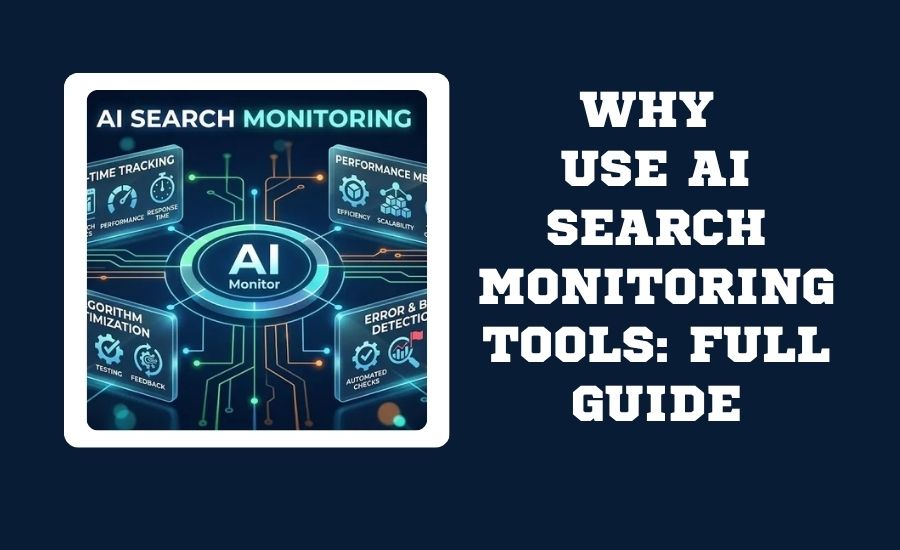
Why Use AI Search Monitoring Tools? What Actually Happens When ChatGPT Talks About You
A field guide to tracking your brand inside ChatGPT, Gemini, and AI Overviews — before your competitors get cited instead of you.
By Oyekale Olawale · Updated August 2026
Quick Answer
Use an AI search monitoring tool because ChatGPT, Gemini, Perplexity, and Google’s AI Overviews now answer questions directly — often without sending anyone to your site — and traditional rank trackers can’t see any of it. These tools run your brand’s actual prompts against real AI engines, then show you whether you’re mentioned, cited, or invisible. Entry-level options like OtterlyAI start around $29/month; enterprise platforms like Profound run into custom five-figure contracts. Most small sites don’t need the expensive tier — they need to start measuring at all.
I run a review site. For years, my only real anxiety was whether Google Search Console showed a ranking drop. That anxiety has a new roommate now: whether ChatGPT even knows my site exists when someone asks it for a recommendation.
That’s the whole reason this category of tool exists. Not because AI is trendy, but because a measurable and growing slice of the audience that used to click through a blue link now gets its answer read to them by a model — and if that model doesn’t mention you, you never find out unless you’re checking.
What Are AI Search Monitoring Tools, Exactly?
An AI search monitoring tool runs a set of prompts — the kind of thing a real buyer would type — against AI engines like ChatGPT, Google AI Overviews, Gemini, Perplexity, and Copilot, on a repeating schedule. It then records whether your brand showed up, whether you were cited with a link, what was said about you, and who beat you to the answer.
That’s a different job than a keyword rank tracker does. A rank tracker checks a fixed position on a results page. An AI answer isn’t a fixed position — it’s a generated paragraph that can change depending on phrasing, the model’s mood on a given day, and which sources it decided to pull from. You’re not tracking rank anymore. You’re tracking whether you exist inside a conversation.
Worth separating two terms people mix up constantly: AI search monitoring watches what real users actually see in consumer AI products, citations and all. LLM monitoring probes a model’s raw training knowledge instead, with no citation data attached. If you want to know how your brand looks to a buyer, you want the former — and that’s what most of the tools in this guide, including WeTracked.io, are built for.
Why This Suddenly Matters
The numbers explain the urgency better than I can. SparkToro’s analysis of Similarweb clickstream data from January to April 2026 found that roughly 68% of Google searches ended without a click — up sharply from a year earlier. Meanwhile, OpenAI reported ChatGPT crossed about 900 million weekly active users in February 2026, and Google’s Q1 2026 earnings put Gemini-powered AI Overviews in front of an estimated two billion-plus people a month.
Put plainly: the destination changed. When the answer is the destination, being cited inside it is the new front page — and citation data doesn’t show up in Google Search Console.
Where AI Search Referral Traffic Comes From (2026)
Source: OtterlyAI’s 2026 AI search referral research. Bars scaled relative to the largest value (ChatGPT, 56%).
That ChatGPT figure alone should reorder most people’s priority list. If you’re only watching how AI Overviews affects your organic clicks and ignoring ChatGPT entirely, you’re missing the biggest single referral source in the category.
How These Tools Actually Work
Under the hood, most platforms follow the same basic loop, even if the polish differs wildly between a $29 tool and a custom-priced enterprise one:
- Prompt discovery. The tool suggests or lets you build a list of realistic buyer prompts tied to your brand, product, or category.
- Scheduled querying. Those prompts run against the AI engines daily or weekly — the better tools query the actual consumer-facing chat interface rather than a raw API, because API responses and what a real user sees can differ.
- Extraction. The tool parses each answer for brand mentions, citations, competitor names, and sentiment.
- Reporting. You get a dashboard showing share of voice, citation trend lines, and — in the better tools — specific fixes.
One technical quirk worth knowing before you shop: AI engines built on retrieval-augmented generation (RAG) pull from a live index, similar to how Google grounds AI Overviews in its own Search index. Pure knowledge-probing tools skip that retrieval step entirely and just interrogate the model’s frozen training data — which is why they can’t show you citations. If a vendor’s pricing page doesn’t mention citation tracking specifically, ask before you buy; you may be paying for LLM monitoring when what you actually need is AI search monitoring.
2026 AI Search Monitoring Tools: Feature and Price Comparison
I pulled current pricing and coverage directly from each vendor’s own site and cross-checked against Otterly.AI’s July 2026 category survey. Prices move often in this space, so treat this as a starting point, not gospel.
| Tool | Engines Tracked | Entry Price | Best For |
|---|---|---|---|
| OtterlyAI | 7 (ChatGPT, AI Overviews, AI Mode, Gemini, Perplexity, Copilot, Claude) | $29/mo | Widest coverage at the lowest real entry price |
| AIclicks | 3 of 10+ on entry tier | $59/mo | Solo operators wanting a built-in action layer |
| Nightwatch | ChatGPT + traditional SERP tracking | $32/mo | Teams that want SEO + AI in one dashboard |
| SE Ranking (SE Visible) | ChatGPT, Gemini, AI Mode, Perplexity, AI Overviews | $79/mo (annual) | Agencies tracking several client brands |
| Peec AI | ChatGPT, Perplexity, Claude, Gemini, Llama, DeepSeek | ~$120/mo | Source-level competitor benchmarking |
| AthenaHQ | 8 | $295/mo | Mid-market teams wanting broad coverage |
| Semrush AI Toolkit | 5+, 25 prompts on entry tier | $99/mo add-on | Existing Semrush users adding AI visibility |
| Ahrefs Brand Radar | 6 | $828/mo minimum | Enterprises already on Ahrefs’ top tier |
| Profound | 4+, enterprise depth | Custom (enterprise) | Large brands needing crawler-level analytics |
Pricing verified against vendor pages and Otterly.AI’s July 2026 comparison; confirm current rates before purchase, since this category updates pricing frequently. For a deeper breakdown of tools built specifically for LLM-era rank tracking, see our complete LLM SEO tracking software guide.
Real-World Use Cases by Business Type
The value looks different depending on what you actually run, so here’s how the same category of tool plays out across a few common setups.
Niche bloggers and review sites get the most direct benefit from citation tracking. When someone asks ChatGPT “what’s the best AI writing tool for beginners,” you want to know whether your review is the one shaping that answer — and if it isn’t, which competitor’s page the model pulled from instead. That single data point tells you exactly which page to strengthen next.
SaaS companies use these tools to watch high-intent comparison prompts like “X vs Y” or “alternatives to X,” since that’s exactly where buying decisions get shaped before a prospect ever visits a pricing page. Losing a comparison prompt to a competitor is often invisible in Google Analytics but shows up immediately in an AI visibility dashboard.
E-commerce brands lean on this to track product-category prompts and seasonal shopping questions, especially now that Google is testing ad placements and shopping results directly inside AI Overviews. A brand that isn’t monitoring that surface can lose shelf space without any warning.
Agencies managing several client accounts get the most operational value, since manually checking dozens of prompts across multiple brands by hand simply isn’t sustainable. Most of the tools compared above include workspace or multi-client features specifically built for this.
Key Features Worth Checking Before You Buy
Vendor homepages tend to blur together after the third one, so here’s the shortlist of features that actually separate a useful tool from a glorified prompt-and-screenshot log:
- Real interface querying, not just API calls. API responses from a model can differ meaningfully from what a consumer sees in the actual ChatGPT or Perplexity app, so tools that query the live interface tend to be more accurate.
- Citation and link-level tracking, not just a binary “mentioned or not” flag. You want to know which specific URL got cited, not just that your brand name appeared somewhere in the answer.
- Country and language-level reporting if you sell internationally — a single global visibility number can hide the fact that you’re invisible in a market that actually matters to you.
- Sentiment classification that goes beyond positive/neutral/negative into actual context, since a “neutral” mention with a factual error is a very different problem than a genuinely balanced one.
- An action layer — recommendations tied to the data, not just a dashboard you have to interpret entirely on your own.
AI Search Monitoring vs. Traditional Rank Tracking vs. LLM Monitoring
These three get used interchangeably in marketing copy, and that’s a mistake worth untangling before you buy anything.
Traditional rank tracking shows a fixed blue-link position for a fixed keyword on a fixed date. It’s precise, but it says nothing about what an AI engine tells someone in a generated paragraph.
LLM monitoring probes a model’s frozen training knowledge — what it “believes” about your brand — through repeated prompt testing. Useful for catching outdated or wrong facts baked into the model, but it returns zero citation data because it’s not looking at a live, grounded answer.
AI search monitoring watches the actual consumer-facing product — the thing a real customer sees when they type a question into ChatGPT search or Google AI Mode. It captures citations, sentiment, and competitor positioning in near real time. This is what most brands actually need, and it’s the category the rest of this guide focuses on.
How I Test the Platforms I Review
Every review and comparison on this site is based on hands-on testing. I personally create an account on each platform, work through the onboarding flow, and use the free plan or trial extensively to explore the actual dashboard — not the marketing page. I pay close attention to usability, feature depth, performance under real prompts, and where the UX breaks down. I take notes as I go, then combine those findings with published documentation and pricing pages to write the review.
One thing I ran into signing up for two of the tools compared above: both required email verification before the dashboard would unlock, and one made me re-enter my workspace name twice because the first submission silently failed with no error message — a small but telling friction point for a tool that’s supposed to be built for speed.
Disclaimer: This review reflects my personal opinion and hands-on experience with each platform. It is not professional, financial, or legal advice. Features, pricing, and policies change — always confirm current details directly with the company before making a purchase decision.
Who Actually Needs This (and Who Can Wait)
Not every site needs a $299/month enterprise contract on day one. Here’s how I’d break it down by stage:
✔ Worth it now
- SaaS and B2B tools competing on “best X for Y” prompts
- Agencies reporting AI visibility to multiple clients
- E-commerce brands losing ground to AI-cited competitors
- Anyone who already ranks well on Google but sees flat AI referral traffic
✘ Can reasonably wait
- Brand-new sites with no traffic or index history yet
- Hyper-local businesses with no informational search intent
- Single-founder projects still validating product-market fit
- Sites where organic traffic isn’t a growth channel at all
The Real Limitations Nobody Puts on the Pricing Page
A few honest caveats before you buy anything in this category:
- AI answers aren’t fixed. The same prompt can return a different answer an hour later. Monitoring shows trends, not a stable “position.”
- Coverage claims vary wildly between the marketing page and the entry tier. A vendor advertising “10+ engines” might only unlock 3 of them on the cheapest plan — check the fine print, not the homepage.
- Referral traffic from AI engines is still small in absolute terms for most niches, even as it grows fast. Don’t expect it to replace organic search traffic overnight.
- Interpreting sentiment data takes practice. A tool flagging “neutral” sentiment isn’t the same as a human reading the actual answer and understanding the nuance.
What Actually Improves Your AI Visibility
This is the part most guides skip: monitoring only tells you where you stand. Here’s what moves the needle once you know.
Google’s own May 2026 Search Central documentation on AI features is refreshingly blunt about this: there are no additional requirements or special markup needed to appear in AI Overviews or AI Mode. These features draw from the same Search index as regular organic results, so the same helpful, people-first content and structured data guidance Google has published for years is still the foundation. Chasing exotic “AI SEO hacks” for Google’s own AI features is largely wasted effort — the fundamentals still carry the weight.
Where it gets more nuanced is off-Google engines like ChatGPT and Perplexity, which use their own source-selection logic entirely separate from Google’s index. For those, three things consistently move the needle in my own testing and in what tools like Peec AI surface in their source analysis: earning mentions on the third-party sites AI engines already cite in your category, structuring pages so a model can lift a clean, quotable answer near the top, and showing up in community discussion threads (Reddit especially) where AI systems increasingly pick up brand signal.
If you want a second opinion on the tooling side, both Soro SEO and SearchAtlas now bundle content optimization features aimed at this exact problem, and our all-in-one SEO software roundup covers how they stack up against dedicated monitoring platforms.
Best Practices Once You’re Monitoring
- Track 20-30 prompts, not 200. Depth beats volume. Pick the exact questions a buyer would actually type.
- Check weekly, act monthly. AI answers shift often enough that daily obsessing over small swings wastes time better spent fixing content.
- Pair it with human judgment. A dashboard can tell you sentiment dropped; only a person can tell you why it actually matters for this specific buyer.
- Watch competitors, not just yourself. If a rival suddenly starts getting cited on prompts they never used to win, that’s usually a signal something changed in their content or their off-site mentions — worth investigating immediately.
Where This Is Headed
A few shifts are already visible in how vendors are building these platforms, and they’re worth watching even if you’re not ready to buy yet.
Google has started rolling out Preferred Sources and subscription labels inside AI Overviews and AI Mode, giving users more direct control over which sites they want surfaced — a small but meaningful shift toward user-chosen visibility rather than pure algorithmic selection. Several monitoring platforms are also adding “agent analytics” features that track how AI crawlers, not just AI answers, interact with a site, which points toward a future where crawler-level access becomes its own optimization target, separate from citation tracking.
The other clear trend is consolidation between AI visibility and traditional SEO tooling. Nightwatch, Semrush, and SE Ranking are folding AI monitoring into platforms that already do keyword tracking and site audits, while dedicated players like OtterlyAI and Peec AI are betting that AI search deserves its own specialized toolset entirely. Which model wins probably depends on how big the AI referral traffic slice gets over the next year or two — worth revisiting this guide again once that trend line is clearer.
FAQ
Do I really need a separate tool, or can I just ask ChatGPT myself?
Manually asking ChatGPT a handful of times gives you a snapshot, not a trend. Answers vary by phrasing, session, and time of day, so one-off checks can easily mislead you. A monitoring tool automates the same question across dozens of prompts on a schedule, which is the only way to see whether your visibility is actually improving or slipping.
What’s the cheapest legitimate option to start with?
OtterlyAI’s $29/month entry plan currently offers the broadest engine coverage at the lowest real price point in the category, based on published vendor pricing as of July 2026. Nightwatch’s $32/month plan is a reasonable alternative if you also want traditional keyword rank tracking bundled in.
Does ranking well on Google guarantee AI visibility too?
Not automatically, and not on every engine. For Google’s own AI Overviews and AI Mode, strong organic rankings help since these features pull from the same index. But ChatGPT, Perplexity, and other third-party engines use their own separate source-selection logic, so ranking on Google is no guarantee you’ll be cited there.
How is this different from a brand monitoring tool like Brandwatch or Mentionlytics?
Classic brand monitoring tools track mentions across social media, news, and review sites. AI search monitoring tracks a narrower, newer surface: what generative AI engines say about you when someone asks them a direct question. The two are complementary, not competing.
Will Google penalize me for optimizing content for AI engines?
No. Google’s own guidance states that generative AI features are rooted in its core Search ranking and quality systems, so the same helpful-content standards apply. There’s no separate penalty risk for writing clear, well-structured, genuinely useful content — that’s the same advice Google has given for years, AI features or not.
How often should I re-check my AI visibility?
Weekly monitoring is a sensible default for most sites; daily tracking mostly matters for large brands with volatile, high-stakes categories. What matters more than frequency is consistency — checking the same prompts over months, not once and forgetting about it.
Bottom Line
AI search monitoring isn’t a hype purchase anymore — it’s closing a measurement gap that’s already costing brands visibility they don’t even know they’ve lost. You don’t need the $828-a-month enterprise tier to start. Pick a tool in the $29-$99 range, track 20-30 prompts that actually match how your buyers search, and check them consistently. The sites that will win the next few years of search aren’t the ones with the fanciest dashboard — they’re the ones who started measuring before their competitors did.